There are two types of announcements in Pakistan.
One is the kind that trends on social media for a few hours and disappears like last night’s chai steam.
The other is the kind that lands in homes quietly, settles into kitchen shelves, and actually changes the mood of a household.
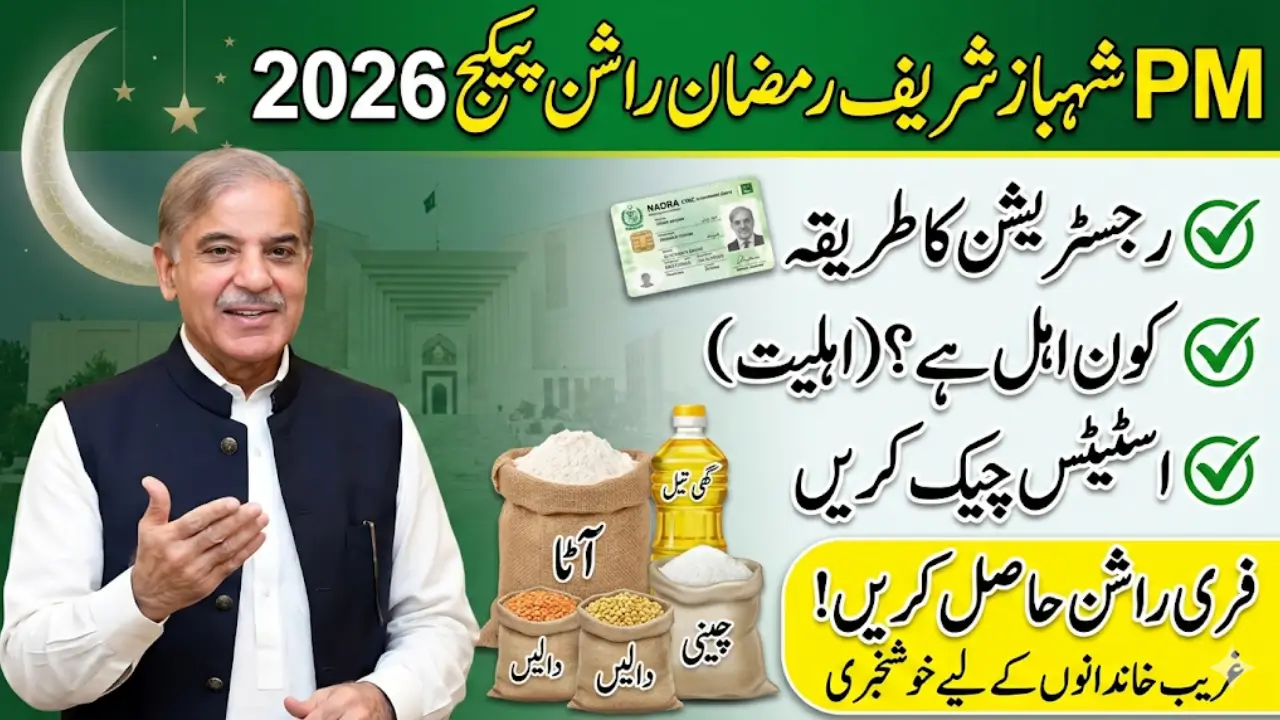
The PM Shahbaz Sharif Ramadan Relief Package worth Rs 38 billion, promising Rs 13,000 per family, falls somewhere in between — and that’s exactly why it deserves a deeper conversation.
Because in a country where inflation bites harder than summer heat in Multan, relief isn’t just a policy. It’s survival.
What Is the PM Shahbaz Sharif Ramadan Relief Package?
Shehbaz Sharif has announced a Ramadan Relief Package of Rs 38 billion, aimed at supporting low-income families during the holy month of Ramadan. Under this initiative, eligible families will receive Rs 13,000 per household to help manage rising food and utility expenses.
Now on paper, Rs 13,000 might look modest. But in the real Pakistan — the Pakistan of utility bills, atta prices, school fees, and gas cylinders — that amount can mean:
- A full month’s grocery support
- Relief from borrowing money before Eid
- Dignity during Ramadan
And dignity matters.
Why This Ramadan Package Actually Matters in 2026
Let’s not sugarcoat it.
Inflation has squeezed middle and lower-income families to a breaking point. The price of essential items — flour, sugar, ghee, pulses — keeps climbing. Utility bills? Don’t even get me started.
Ramadan, spiritually uplifting as it is, becomes financially stressful for many households. Sehri and iftar aren’t optional. Guests come. Traditions must be maintained. Expectations rise.
This is where the Ramadan Relief Package Rs 13,000 per family enters the scene.
It’s not charity. It’s state-backed support.
And there’s a difference.
Rs 38 Billion Allocation – Big Number, Bigger Expectations
Let’s talk numbers.
Rs 38 billion is not pocket change. It signals that the government is allocating serious funds toward targeted relief. The key question, however, isn’t just how much money is announced.
It’s how efficiently it reaches people.
In Pakistan, announcements are easy. Implementation? That’s where things get interesting.
If the distribution process remains transparent, digital, and corruption-free, this package could genuinely stabilize millions of households during Ramadan.
If not, well… we’ve seen that movie before.
Who Will Receive Rs 13,000 Per Family?
While official eligibility criteria typically focus on low-income and registered families, beneficiaries are usually identified through existing government databases and social welfare programs.
In previous relief programs, priority was given to:
- Low-income households
- Registered beneficiaries under social safety nets
- Families already verified through national databases
The goal is clear: direct cash assistance to those who need it most.
And honestly? Direct cash works better than ration trucks and political photo ops.
Because cash gives choice.
And choice gives dignity.
Cash Assistance vs Utility Stores – Which Is Better?
Here’s my unpopular opinion.
Direct cash transfers are smarter than subsidized ration schemes.
Why?
Because every household’s needs are different. One family may need flour and rice. Another may need medicine. Another might need to clear an electricity bill before disconnection.
Rs 13,000 in hand allows families to prioritize.
A subsidized sugar bag doesn’t.
This shift toward cash-based Ramadan relief reflects a more modern welfare approach — and frankly, it’s long overdue.
The Real Impact on Pakistani Families
Let me paint you a picture.
A father earning daily wages. Income unstable. Expenses rising. Ramadan approaching.
Normally, this would mean borrowing from relatives. Cutting down iftar variety. Skipping meat altogether. Avoiding social gatherings.
Now imagine receiving Rs 13,000 before Ramadan.
Suddenly:
- Grocery anxiety reduces
- Eid planning feels possible
- Household tension eases
Relief isn’t just financial. It’s psychological.
And that psychological relief? That’s priceless.
Economic Implications of the Ramadan Relief Package
Now let’s zoom out.
When Rs 38 billion flows into low-income households, that money doesn’t sit in bank accounts.
It circulates.
It moves into local kiryana stores. It reaches vegetable vendors. It supports small shopkeepers. It boosts short-term demand in local markets.
In economic terms, this is stimulus spending — but targeted.
Instead of trickling down from elite sectors, it starts at the bottom.
And when relief starts at the bottom, the impact tends to spread wider.
Criticism & Political Debate – Because Of Course There Is
Let’s not pretend this is universally praised.
Opposition voices often argue:
- Is this relief temporary or sustainable?
- Is it politically motivated ahead of elections?
- Will distribution be fair?
These questions aren’t unreasonable.
But here’s the thing: a struggling family doesn’t care about political debates when they’re calculating grocery budgets.
Relief is relief.
However, long-term structural reforms — job creation, inflation control, economic stabilization — are equally important.
Cash support during Ramadan helps.
It doesn’t fix everything.
And pretending it does would be dishonest.
Transparency: The Make-Or-Break Factor
Every relief package in Pakistan faces one critical test:
Transparency.
Will funds reach intended beneficiaries without middlemen interference?
Will digital verification systems reduce fraud?
Will there be public data on disbursement numbers?
If this Ramadan Relief Package is executed transparently, it could strengthen public trust significantly.
If mishandled, it risks becoming another headline that fades into skepticism.
Implementation matters more than announcement.
Always.
Ramadan Relief and Social Stability
Here’s something policymakers rarely admit publicly:
Economic relief reduces social tension.
When households feel financially suffocated, frustration builds. When basic needs are secured, even temporarily, social stability improves.
Ramadan is a spiritually sensitive time. Financial pressure during this month intensifies emotional stress.
A well-executed Rs 13,000 assistance program can prevent:
- Debt spirals
- Informal borrowing at high interest
- Household conflicts
Relief programs aren’t just economic tools.
They’re social stabilizers.
Is Rs 13,000 Enough?
Let’s be honest.
In today’s economy? It’s helpful — but not magical.
For some families, it may cover most Ramadan groceries. For larger households, it might cover half.
But here’s the key:
It’s support, not a salary.
And in difficult times, even partial support can create breathing space.
Breathing space can prevent collapse.
And preventing collapse is sometimes the most realistic goal.
Digital Distribution – The Future of Welfare in Pakistan
One promising development in recent years has been digital cash transfer systems.
When relief is distributed through verified databases and digital channels:
- Leakages decrease
- Speed improves
- Political interference reduces
If the PM Shahbaz Sharif Ramadan Relief Package leverages digital infrastructure effectively, it could set a stronger precedent for future welfare programs.
Pakistan doesn’t just need bigger packages.
It needs smarter ones.
Public Trust and Government Credibility
Every major relief initiative carries a hidden objective: restoring public confidence.
When citizens see tangible benefits — actual money in hand — trust improves.
Trust strengthens governance.
Governance stabilizes economies.
It’s all connected.
The Rs 38 billion Ramadan Relief Package is more than a seasonal gesture. It’s a credibility test.