For thousands of families, Ramadan also brings financial pressure. Grocery prices rise. Utility bills don’t pause. Daily wage earners feel the squeeze the most. And inflation? It doesn’t fast.
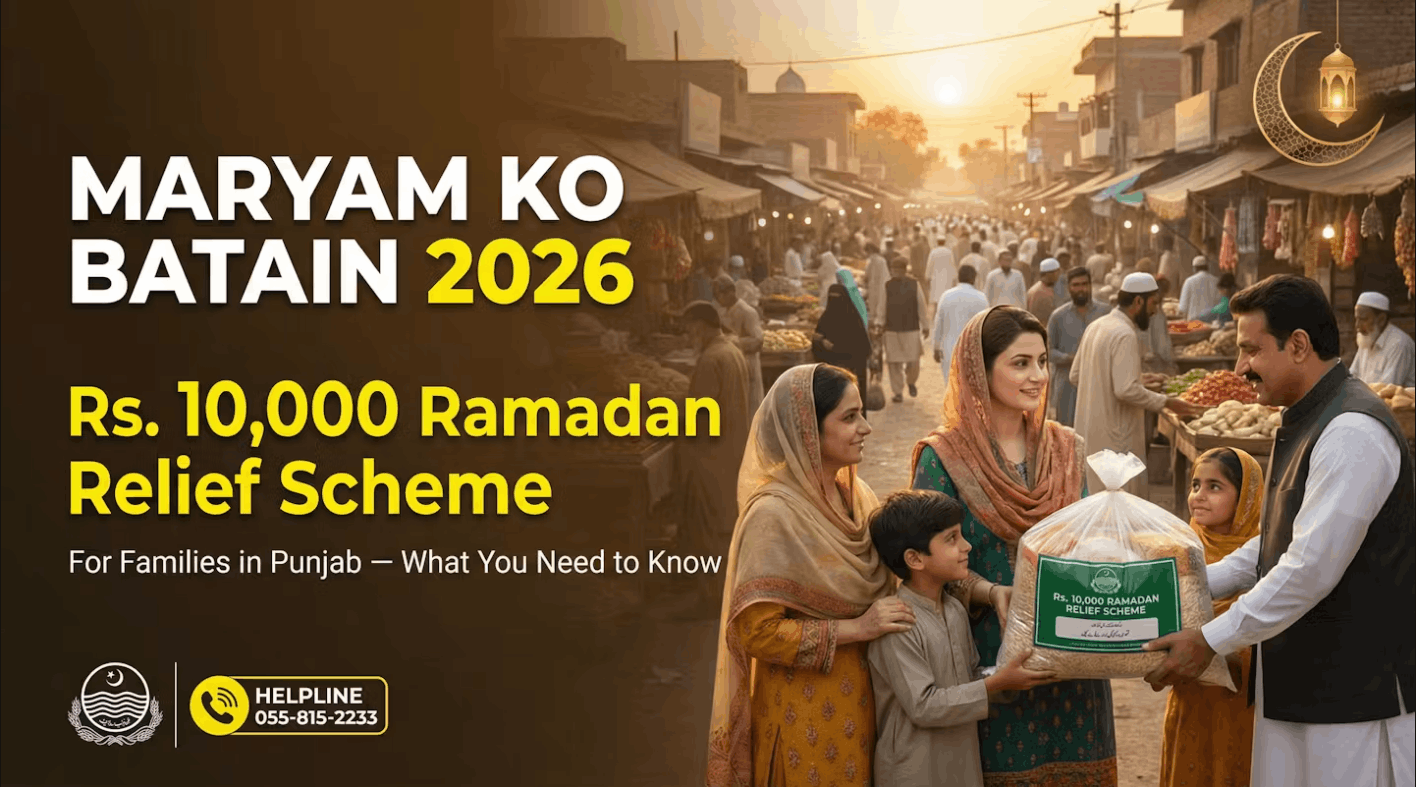
That’s the backdrop against which Maryam Nawaz has launched the Maryam Ko Batain 2026 Ramadan Relief Program, offering Rs. 10,000 cash assistance to deserving families across Punjab.
It’s simple in structure. Direct in message. And bold in timing.
The scheme comes with one central lifeline: Helpline 1000 — a 24/7 toll-free number for registration, eligibility checks, and complaints.
But what exactly is this scheme? Who qualifies? How do you apply? And more importantly — will it actually reach the people who need it most?
Let’s unpack it properly.
What Is the Maryam Ko Batain 2026 Ramadan Relief Program?
The Maryam Ko Batain Scheme 2026 is a province-wide Ramadan relief initiative designed to provide Rs. 10,000 one-time financial assistance to low-income households in Punjab.
It’s positioned as:
- Emergency Ramadan support
- A direct cash transfer
- A digitally monitored distribution system
- A transparent and accessible public welfare program
The idea is straightforward: instead of forcing families to stand in long queues for ration bags or wait for local political approvals, the government wants to provide direct cash assistance.
Cash gives choice. And choice gives dignity.
Why Rs. 10,000 Matters More Than It Sounds
Some people will say, “Rs. 10,000 isn’t enough.”
Maybe. But for a daily wage worker earning irregular income, that amount can cover:
- Basic Ramadan groceries
- Utility bill payments
- School-related expenses
- Emergency medical needs
It won’t solve poverty. But it can reduce immediate stress during a month that’s supposed to be spiritual — not stressful.
And that’s the real purpose here: temporary relief, not permanent reform.
Program Overview — The Essentials
Here’s what we know so far:
Program Name: Maryam Ko Batain 2026
Launched By: Maryam Nawaz
Relief Amount: Rs. 10,000 (One-Time Ramadan Aid)
Coverage Area: Punjab Province
Start Date: From 1st Ramadan 2026
Application Method: Helpline Call & Online Portal (details to be announced)
Helpline: 1000 (Toll-Free, 24/7 Active)
Target Group: Low-income & deserving families
It’s structured as an emergency seasonal relief program — specifically tied to Ramadan 2026.
Helpline 1000 — The Core of the System
Let’s talk about the most important feature: Helpline 1000.
This is not just a contact number. It’s the primary gateway to the scheme.
By dialing 1000, citizens can:
- Register for the Rs. 10,000 Ramadan aid
- Verify eligibility status
- File complaints
- Get guidance on the application process
- Track application progress
And yes — it operates 24 hours a day.
That matters.
Because financial stress doesn’t follow office hours.
Who Is This Scheme Really For?
The Maryam Ko Batain 2026 scheme primarily targets:
- Low-income families
- Daily wage earners
- Widows
- Unemployed individuals
- Families struggling with inflation
- Households not receiving major government assistance
Priority will likely go to those not already enrolled in significant provincial or federal aid programs.
And that’s important — because duplication of benefits has always been a challenge in relief distribution.
How to Apply for Rs. 10,000 Maryam Ko Batain Relief
The process has been designed to be simple.
Step 1: Call Helpline 1000
Dial 1000 from your registered mobile number.
Step 2: Provide CNIC Details
You will be asked for your CNIC number and basic household information.
Step 3: Eligibility Verification
The system will verify your financial status through digital checks.
Step 4: Approval & Disbursement
If approved, the Rs. 10,000 amount will be processed according to official distribution instructions.
An online registration portal is expected to be announced soon, offering an additional digital option for applications.
Required Documents
While detailed criteria are yet to be formally published, applicants should be prepared with:
- Valid CNIC
- Basic household information
- Registered mobile number
No application fee. No agent required. No “service charges.”
If anyone asks for money in exchange for approval — that’s fraud.
Digital Monitoring & Transparency — The Real Test
One of the strongest claims attached to this program is transparency.
The Punjab Government has introduced a computerized tracking and verification system to ensure:
- Fair distribution
- Prevention of duplicate applications
- Faster approvals
- Real-time monitoring
- Complaint resolution tracking
This digital backbone is supposed to reduce corruption and delays — two issues that have historically plagued relief programs.
But let’s be honest.
Technology is only as strong as the people operating it.
The real test will be whether complaints are resolved quickly and whether applicants receive timely confirmation.
CLICK HERE TO CHECK ELIGIBILITY
What Makes This Different From Previous Ramadan Packages?
Traditional Ramadan packages often focused on:
- Subsidized ration distribution
- Utility store discounts
- Political distribution events
The Maryam Ko Batain scheme shifts the model toward direct cash support.
That’s a strategic move.
Cash transfers reduce logistical complexity. No storage. No transportation bottlenecks. No favoritism at distribution points.
It’s cleaner. Faster. More scalable.
And frankly — more modern.
Public Reaction So Far
Initial response among citizens appears cautiously hopeful.
Many appreciate:
- The simplicity of calling 1000
- 24/7 availability
- Direct financial assistance
- Digital monitoring
However, skepticism remains — and that’s fair.
People want to know:
- How long will approval take?
- When exactly will payments be disbursed?
- Will the system crash under heavy call volume?
- How will complaints be handled?
These are legitimate concerns.
Trust isn’t built by announcements. It’s built by execution.
The Political Angle — Let’s Not Ignore It
Relief programs in Pakistan always carry political weight.
Launching a Ramadan relief package positions the Chief Minister as responsive to public hardship. It builds visibility. It strengthens grassroots connection.
But here’s the nuance: political benefit and public benefit are not mutually exclusive.
If families receive timely support, the scheme succeeds — regardless of political optics.
And if it fails, criticism will be louder than praise.
Why Timing Matters
Ramadan amplifies financial strain.
Daily wage earners may work fewer hours. Household expenses increase. Social obligations expand.
By launching the Maryam Ko Batain 2026 scheme from the 1st of Ramadan, the government is aiming for immediate relief rather than delayed assistance.
That timing will determine perception.
If funds reach families early in the month, impact will be visible. If delays occur, frustration will overshadow goodwill.
Common Questions About Maryam Ko Batain 2026
What is Maryam Ko Batain 2026?
A Ramadan relief scheme offering Rs. 10,000 to deserving families in Punjab.
How do I apply?
Call Helpline 1000 or register through the official online portal (once launched).
Is Helpline 1000 free?
Yes, it is toll-free and available 24/7.
Is there any application fee?
No. The service is completely free.
Can I apply if I receive other aid?
Priority will likely be given to families not already receiving major assistance.
How will I know if I’m approved?
You will receive confirmation during or after the verification process.
A Larger Question: Can Emergency Relief Build Long-Term Trust?
Here’s the truth.
Rs. 10,000 won’t fix systemic economic challenges.
It won’t eliminate unemployment.
It won’t control inflation.
But it can reduce short-term pressure. And sometimes short-term relief prevents long-term crisis.
If this program runs smoothly — with fast verification, transparent tracking, and fair disbursement — it could strengthen public trust in digital governance.
If it falters, criticism will be swift.